
Getting more comfortable asking people for money (and winning the Audience Favorite award)
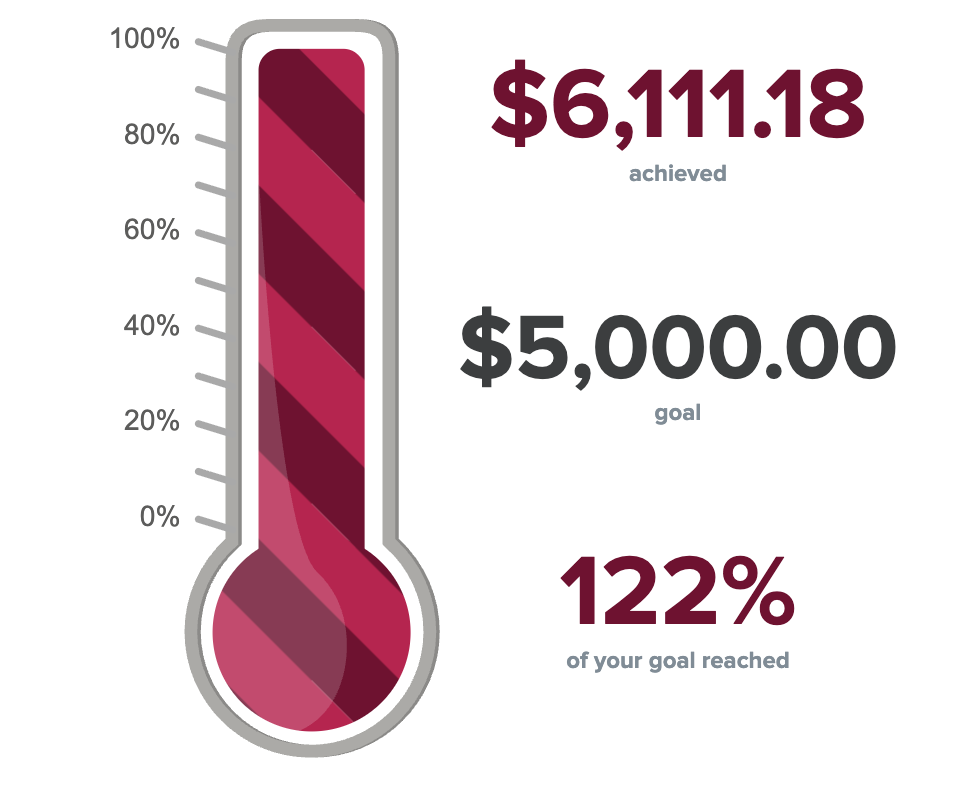
Thank you to the Greater Sum Foundation for helping us with our very first holiday giving campaign and providing a $5000 match.
Thank you to everyone who donated to Good Neighbor Lab’s holiday fundraiser! In addition to exceeding our campaign goal and receiving the maximum of Greater Sum Foundation’s matching grant, we also won the Audience Favorite award for having the most individual donors (76!) among the nonprofits in their winter accelerator.
This was a big deal for me for many reasons, but especially because of how nervous I was, and have always been, about asking people for money.
If you’re curious to read the longer version, about my journey getting more comfortable asking for money, what fear mitigation techniques I used, and what I cried to my therapist about last week, read on…
I have always been nervous about asking people for money.
I’ve known I wanted to run my own nonprofit since high school. My immigrant parents hated the idea.* They were worried that running a nonprofit meant I’d always be broke and struggling, and tried hard to convince me to pursue other careers (which I did). One summer during college, my parents made me cancel my summer travel + research plans and get a job fundraising for a nonprofit instead. They wanted to finally knock the nonprofit idea out of me by showing me how hard it was. I listened to them and got a summer job in San Francisco as a phone canvasser at the national nonprofit Clean Water Action. I took BART into the city, rode the elevator up to the office and found my cubicle, where a list of names and phone numbers was waiting for me. My job was to call people from the list and read a script asking them to donate money. Most people I called hung up right away, but some would talk to me, and a few donated. By the end of the summer I was demoralized and defeated. I was 20 years old, full of big ideas about how to change the world, and I hated that job so much. I felt like a telemarketer and thought well, if telemarketing isn’t for me, maybe my parents are right and running a nonprofit isn’t for me either.
Twenty years later (woops), I’m finally trying to change the narrative in my head. While I’m comfortable with grant applications and pitch competitions— where the $ is being offered— approaching people personally has always felt like a whole other beast. At the end of last year, I finally started dipping my toes in the water of personally asking people to donate money.
September 2025: In a testament to how last minute the inaugural SF Good Neighbor Week came together, I put together a sponsorship page ten days (!) before the event. But the stronger testament— to the amount of excitement and inbound interest I was getting for SF Good Neighbor Week— and the reason I built that sponsorship page at all, given all the other logistics I was juggling— is that Sutter Health reached out asking if they could sponsor (so I was like oh crap, I better put together a sponsorship page real quick). The confidence I got from a big name sponsor proactively reaching out to me— and the fact that I now had a sponsorship page up and running— helped give me the boost I needed to send the sponsorship page out more broadly (which worked in getting additional sponsors, despite being a shocking 10 days away!)
Fear mitigation: The clear “perks” of sponsorship helped mitigate my fear that people were donating without getting anything in return. It felt more like a transaction or a sale than a pure donation. A good baby step for me, as I dipped my toes in the water.
October 2025: I turned 40 and threw a rager on a boat (IYKYK). Instead of gifts I asked people to donate money to Good Neighbor Lab. A lot of my friends and family donated. It was a big deal for me because, while I’ve often used birthdays or holidays to encourage donations to other nonprofits, I’ve never asked for donations to my own. And many people who were invited were people I had never spoken to about the work I’m doing.
Fear mitigation: It was my 40th birthday, and I was throwing a huge party, so it didn’t seem far fetched that people would donate if I asked for that as my present. Another good baby step for me, as I continued to dip my toes in.
November 2025: As I started thinking about holiday fundraising (which I quickly learned I should have been thinking about months earlier), I learned that Google gave all its employees $400 to donate through Benevity. I had heard of other companies doing a holiday match, but I didn’t know of other companies that straight up gave their employees dollars to donate. I happen to personally know many Google employees, so I was able to reach out and ask them for their Benevity bucks. I’m so grateful for my friends at Google— many of whom I hadn’t spoken to in a while but who I hold a lot of love in my heart for— who donated.
Fear mitigation: well, it wasn’t their money! So why not ask. Another good baby step for me.
December 2025: In the spring I participated in the Greater Sum Virtual Incubator, a fantastic incubator for early-stage nonprofits, run by the Greater Sum Foundation. At the end of the incubator I won second place in their pitch competition, earning me a spot in their winter accelerator. In the winter accelerator, called Promising Practices, Greater Sum helps nonprofits run their first holiday giving campaigns and provides a matching grant, as well as an Audience Favorite award to the nonprofit with the most individual donations. It was perfect timing for me to participate, but also oh, so scary.
I couldn’t use any of the fear mitigation techniques/ rationalizations from the previous months: there were no “perks” to the person donating, I wasn’t inviting them to an amazing birthday party, and the money would come from their personal bank accounts. I really pushed myself to reach out to people I hadn’t spoken to in a while (especially ‘cause I didn’t want to ask my friends and family again, since they had just donated for my birthday). I framed the approach both in my head and in my emails as outreach to “my personal cheerleaders,” and told myself that these are people who want to support me and my work, and I was giving them a tangible opportunity to do so.
The campaign ran through the month of December. In the end, so many people donated that I exceeded the maximum amount of the matching grant and also won the Audience Favorite award. I was floored. Last week during my call with my therapist—in which we were not discussing anything related to fundraising— I suddenly got emotional, describing the moment when I opened the email from Greater Sum with my full list of donors. I had to keep scrolling and scrolling to read all 74 (!) names. I’ll never forget the feeling of scrolling more than I thought I would scroll because the list of supporters was so long.
I am proud of myself for finding the strength to take the Greater Sum opportunity seriously, go all in, and find the right framing both for my head and for my outreach. And I am so grateful for the people who’ve crossed paths with me who continue to support me. Knowing how many personal cheerleaders I have out there is truly— not just what I write in my fundraising emails— what keeps me getting up on the days I’m down.
Fear mitigation: reframing asking for money as outreach to people who want to support me and my work, and now I’m giving them a tangible way of doing so.

From the Greater Sum’s winter accelerator recap.
I still have many lessons to learn about fundraising, and I still feel like a total newbie. But when I look back at the last few months and how much I’ve learned and grown— from bringing in corporate sponsors, to figuring out a framing that feels authentic and true, I feel proud. And I don’t feel like a telemarketer.
Thank you so much to everyone who donated.
*And no, I don’t begrudge my parents for discouraging me from pursuing the nonprofit path. I know they just want what’s best for me. (And nonprofits were not a “thing” in the Soviet Union.)
